
Next Event in Series
Redefining Early-Line Oncology Patient Impact
October 12-15, 2026 | San Diego, CA
Showcasing Novel Linker & Conjugation Technologies to Optimize Stability, Unlock New Payloads, & Reduce Off-Target Toxicity to Better Balance Safety & Efficacy
ADC innovation is accelerating beyond traditional cytotoxins into dual-payload constructs, high-DAR species, degrader-antibody conjugates, and next-generation modalities. However, this rapid evolution is placing unprecedented pressure on linker architecture and conjugation chemistry to control stability, reduce off-target toxicity, overcome tumor resistance, and maintain manufacturability.
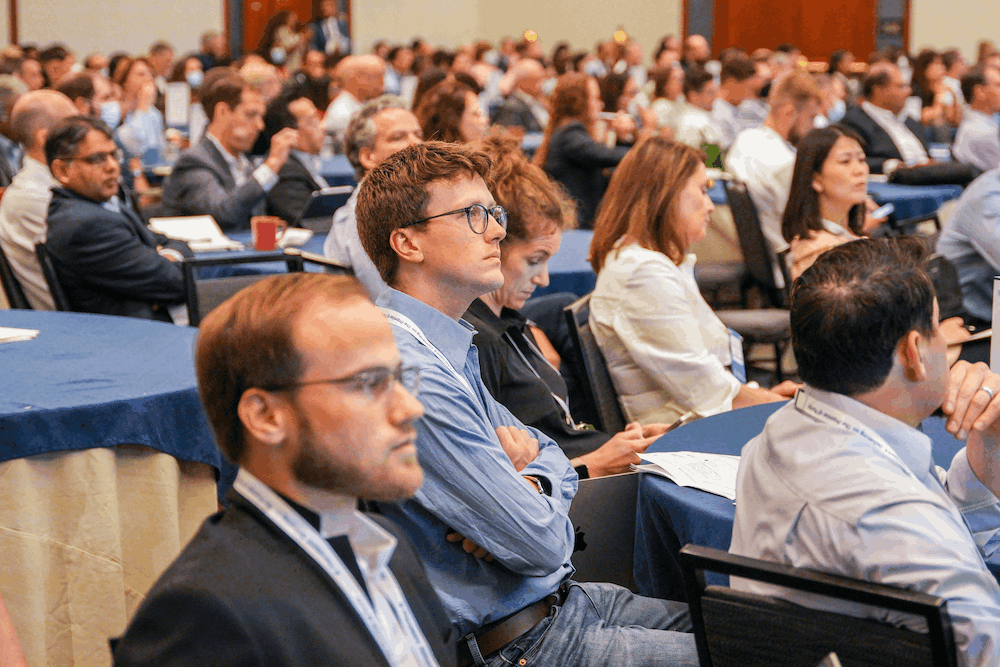
To meet these challenges head on, the 4th ADC Linker & Conjugation Summit offered a highly technical, deeply curated environment built specifically for specialists working at the cutting edge of ADC chemistry. At this summit, attendees were not lost in a crowd, but surrounded by peers who shared the same job titles, scientific focus, and day-to-day challenges. Every session was built for specialists, every conversation was relevant, and every detail was designed to advance real chemistry solutions.
Over three focused days, 80+ ADC chemists, protein engineers, and translational scientists dissected the core chemistry questions shaping next generation ADC performance. With 20+ expert-led case studies from leading biopharma and biotech innovators, attendees gained actionable insights to engineer homogeneous ADCs, prevent premature payload release, enable orthogonal dual payload systems, mitigate hydrophobicity driven aggregation, and integrate predictive modeling into platform design.
Through hands-on workshops, technical debates, and collaborative networking, this summit gave attendees the rare opportunity to shape the linker and conjugation strategies that will define the next decade of ADC development.
Trending Now: Most In-Demand Sessions
Attending Companies Included
Attendees joined the teams advancing ADCs and next-generation conjugates, driving innovation in linker design, conjugation strategies, and the development of safer, more stable, manufacturable drugs.
Meet the organisations and senior experts who attended, including Chief Scientific Officers, ADC Directors, Heads of Chemistry, and Senior Scientists.



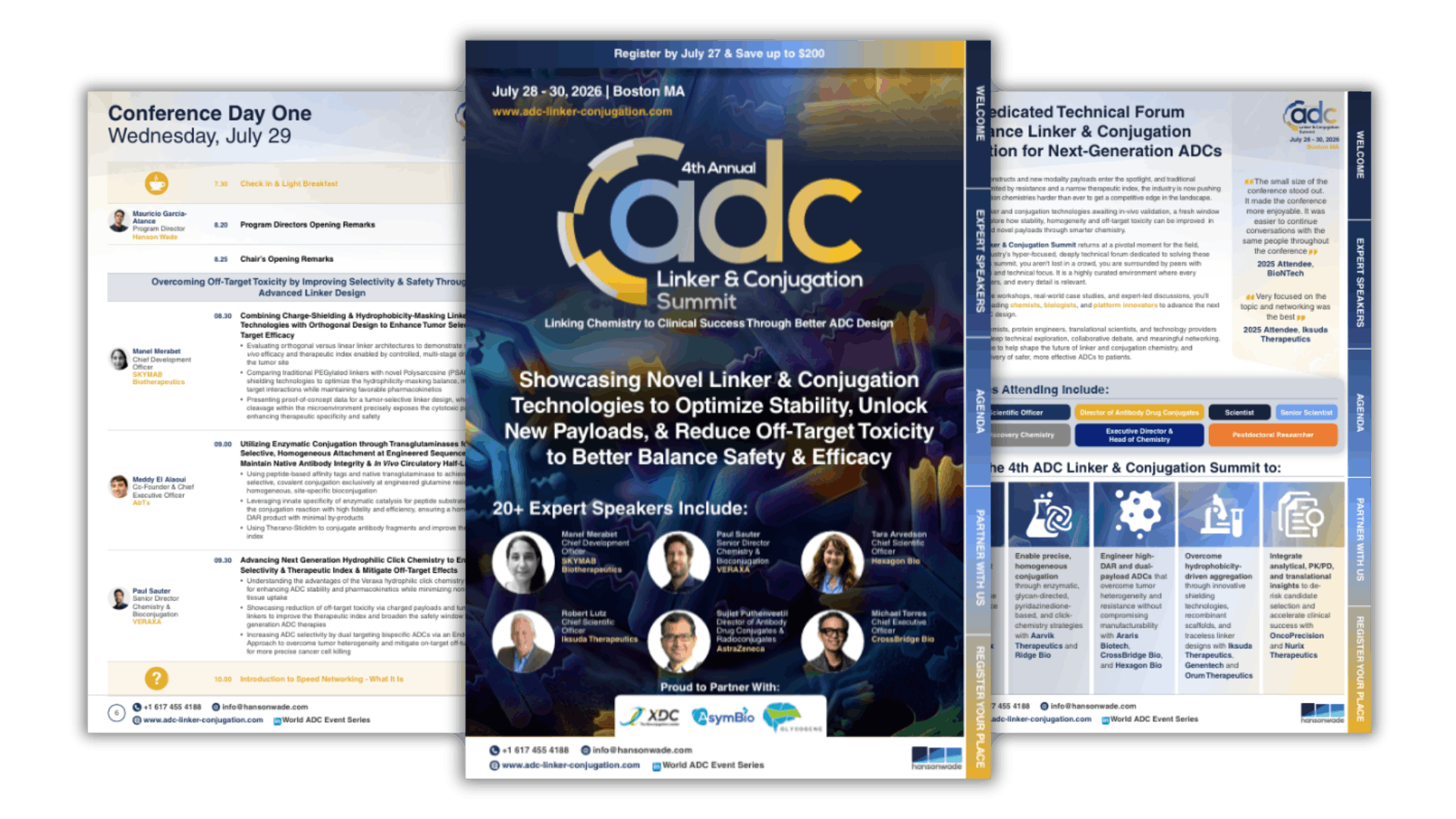
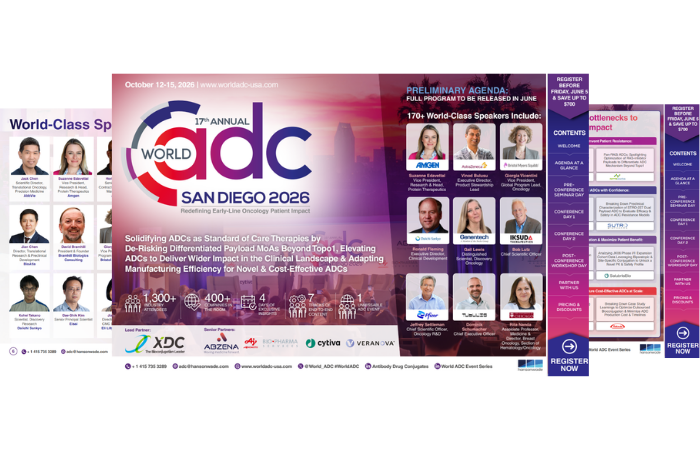
Explore the 2026 Event Guide
The 4th ADC Linker & Conjugation Summit was the only dedicated platform focused solely on solving the chemistry challenges underpinning next-generation ADC design.
Highlights Included:
- 20+ expert speakers from leading big pharma and biotech organizations advancing linker and conjugation innovation
- Actionable, technical insights into site-specific, enzymatic, glycan-directed, click-chemistry, and pyridazinedione-based conjugation strategies
- Case studies on dual-payload ADCs, high-DAR constructs, degrader-antibody conjugates, and orthogonal conjugation platforms
- 2 interactive pre-conference workshops bridging chemistry with PK/PD and translational performance
Your 20+ Linker & Conjugation Expert Speakers Included










Official 2026 Partners
Expertise Partners

Exhibition Partners
-
The timing and content of the talks was fantastic.
2025 Attendee, Johnson & Johnson

-
I enjoyed that it was a very specific crowd of experts in (as the name indicates) Linker & Conjugation - especially that it wasn't only big pharma based but a nice mixtures of pharmaceutical companies, biotech, start-up and even academia-based professors. I appreciated that it wasn't too big of a crowd either, so you had the chance to meet and connect with everyone (kudos for the speed networking as well). I think having the first pre-conference workshop day was really good also, this featured some interesting conversations and set the tone for the rest of the conference. Choice of speakers/topics was really well done as well, learnt some new things from the fields!
2025 Speaker, ADC Therapeutics

-
The quality of the data presented was outstanding, with very thoughtful case studies that sparked valuable discussions. What stood out most to me was the depth of expertise of the speakers and the openness of the audience, which made the exchange both insightful and enjoyable.
2025 Speaker, SKYMAB Therapeutics
Explore Related Events




Explore the 2026 Agenda
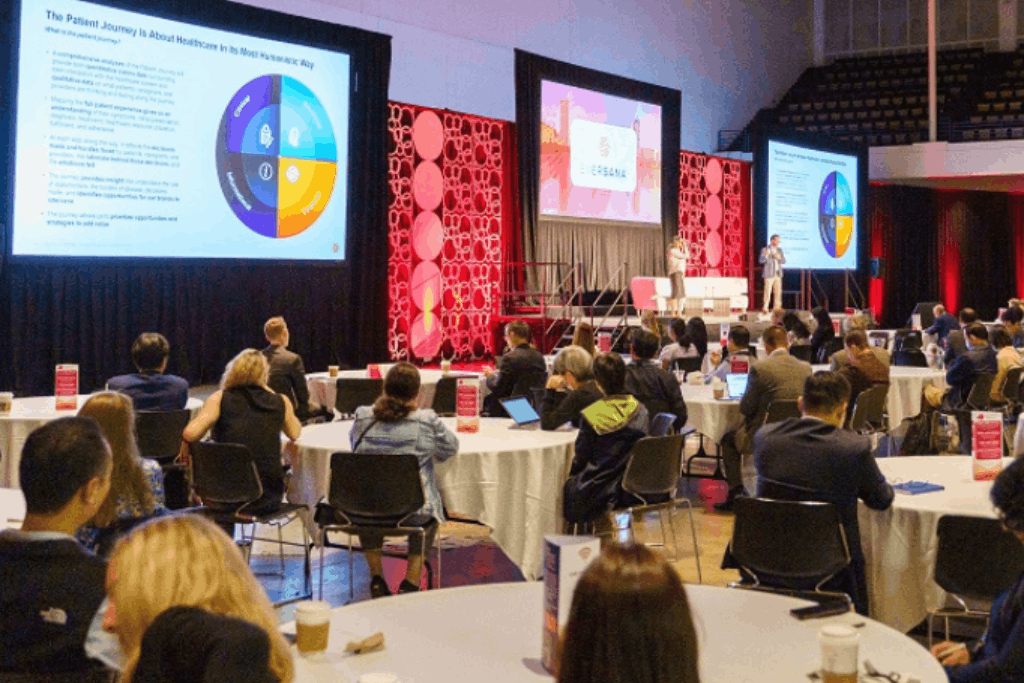
Attendees gained actionable insights from expert-led sessions on advanced linker design, next-generation bioconjugation chemistries, and strategies to minimize off-target toxicity.
Partner With Us
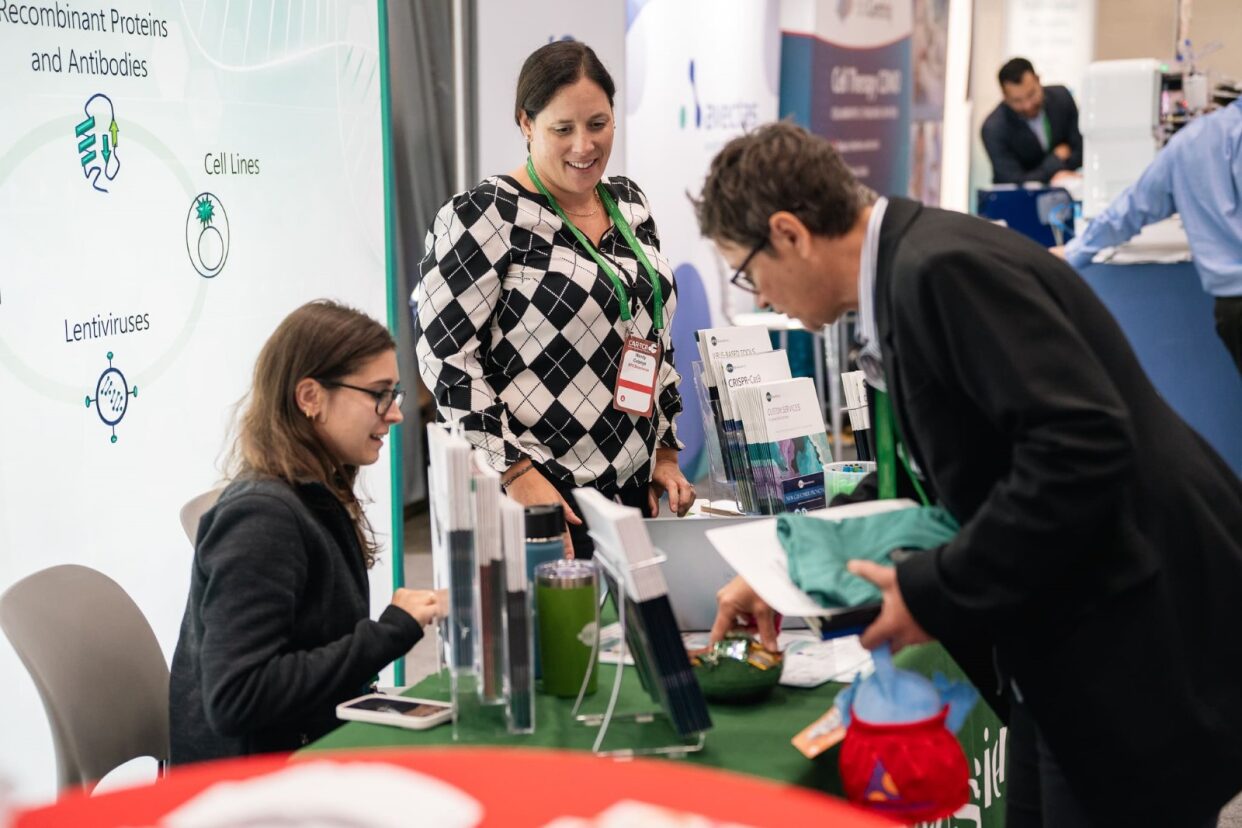
Connect with 80+ ADC linker and conjugation leaders actively seeking solutions to advance the design, production and testing their of next-generation ADC technologies.
Join ADC Linker & Conjugation Experts
Network with senior scientists and highly technical experts working at the cutting edge of ADC chemistry, alongside key decision makers from leading biopharma organizations, in dedicated sessions designed to build meaningful collaborations.