

Optimising ADC Design Through Biology-Driven Linker Strategy: Interview with Gaston Sori
As the ADC field continues to evolve, the focus is shifting from simply increasing potency to improving precision and tolerability. Gaston Sori, Co-Founder & Chief Scientific Officer at OncoPrecision, is taking a biology-first approach to linker and conjugation design, emphasising tumor-selective release and therapeutic index optimisation. In this interview, he shares his perspective on why linker strategy must be guided by disease biology, how the field is rethinking the role of bystander effects, and what insights he’s looking forward to exploring with peers at the 4th ADC Linker & Conjugation Summit.
Sorry, we couldn't find any posts. Please try a different search.
1. What opportunities do you currently see for ADC linker and conjugation technologies?
Contrary to what was assumed in the earlier stages of ADC development, current evidence strongly indicates that ADCs don't actually raise the maximum tolerated dose, systemic exposure to released and deconjugated payload still drives off-target toxicity, so tolerability tracks the free small molecule. To me, that reframes where the opportunity lies: linker stability and controlled, tumor-selective release are now the highest-leverage variables in the field.
2. How has linker and conjugation chemistry evolved in recent years?
As a cancer cell biologist rather than a chemist, what strikes me most is that linker design has become a way to actively tune the bystander effect and, importantly, to decide whether you even want it. It's often framed as inherently beneficial, but it carries a real price depending on tumor biology and heterogeneity: in our lead leukemia asset, ONC001, we deliberately chose a non-cleavable linker with no bystander activity, because a cleavable version with the same payload showed only marginal gains in activity alongside severe in vivo toxicity. To me, that's the meaningful evolution, not the chemistry for its own sake, but the recognition that the right linker is dictated by the biology of the specific disease, with no single design that's universally optimal.
3. Which linker and conjugation methods do you believe are the most promising today?
I may give an unexpected answer: because OncoPrecision concentrates its innovation in the biology first-in-class targets and patient-guided payload selection through our ex vivo micro-avatar platform, we deliberately chose proven conjugation chemistry rather than the newest methods. So while technologies such as site-directed conjugation will certainly keep gaining ground, I don't think they will fully displace established methods yet and for a small biotech, IP position, CMC cost, and speed to market can matter as much as having the latest technology.
4. What exciting work are you looking forward to sharing at the Summit?
I will be leading a workshop focused on connecting linker and conjugation chemistry to clinical efficacy and safety through integrated biological insight into the tumor microenvironment. The thread I most want to explore there is the gap between chemistry that looks elegant at the bench and how it actually performs in vivo, why otherwise promising linker designs so often fail to translate, and how chemists and biologists can co-design ADCs for an optimized therapeutic index from the very start rather than validating biology after the fact.
5. What are you most looking forward to at the 4th ADC Linker & Conjugation Summit?
Learn, learn, learn! After spending so much time deep in our own programs, I'm looking forward to having my assumptions challenged, hearing where other groups are seeing linker and conjugation chemistry succeed or fail, and leaving with questions I hadn't thought to ask.
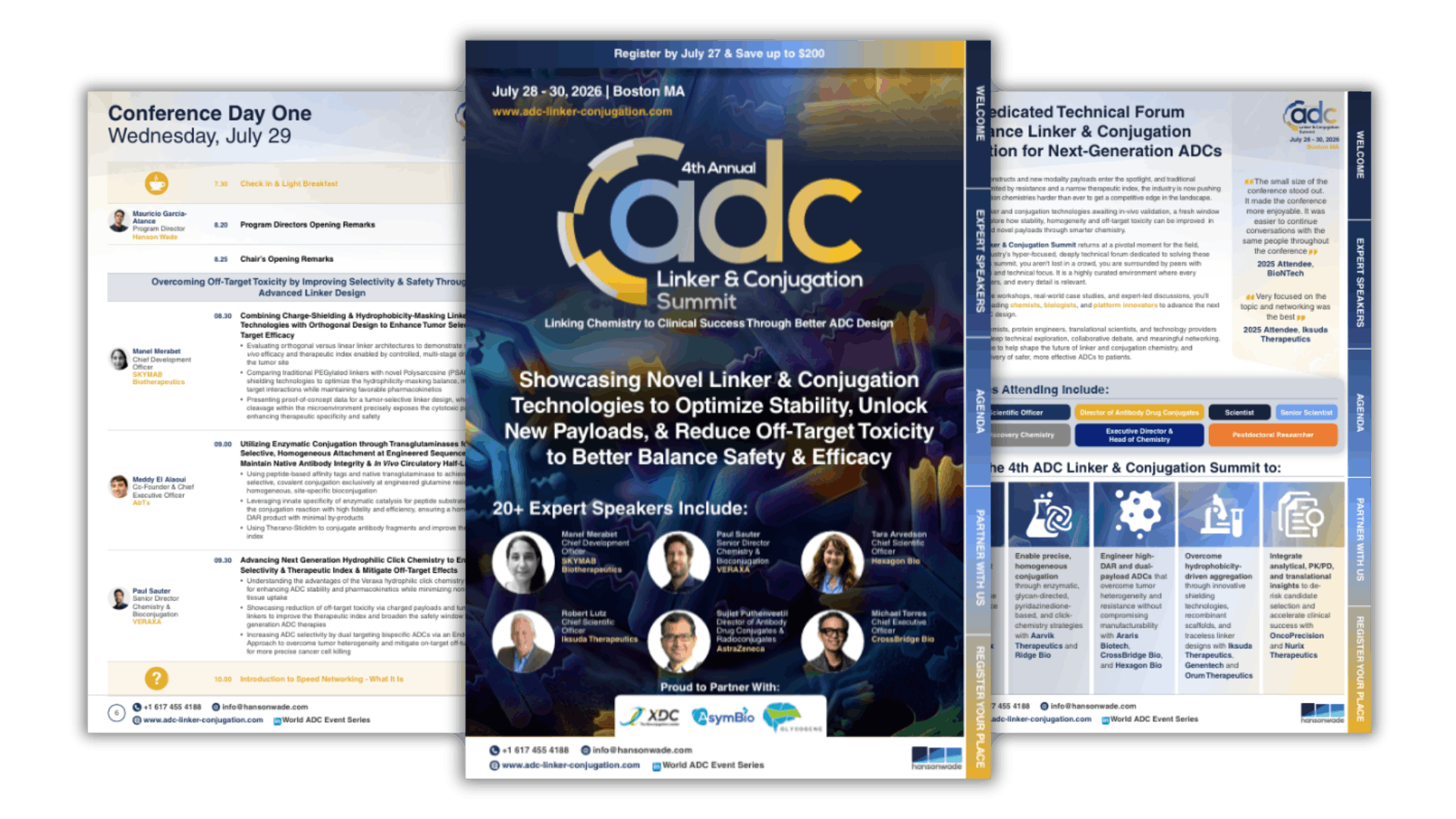
Explore the 2026 Event Guide
The 4th ADC Linker & Conjugation Summit was the only dedicated platform focused solely on solving the chemistry challenges underpinning next-generation ADC design.
Highlights Included:
- 20+ expert speakers from leading big pharma and biotech organizations advancing linker and conjugation innovation
- Actionable, technical insights into site-specific, enzymatic, glycan-directed, click-chemistry, and pyridazinedione-based conjugation strategies
- Case studies on dual-payload ADCs, high-DAR constructs, degrader-antibody conjugates, and orthogonal conjugation platforms
- 2 interactive pre-conference workshops bridging chemistry with PK/PD and translational performance
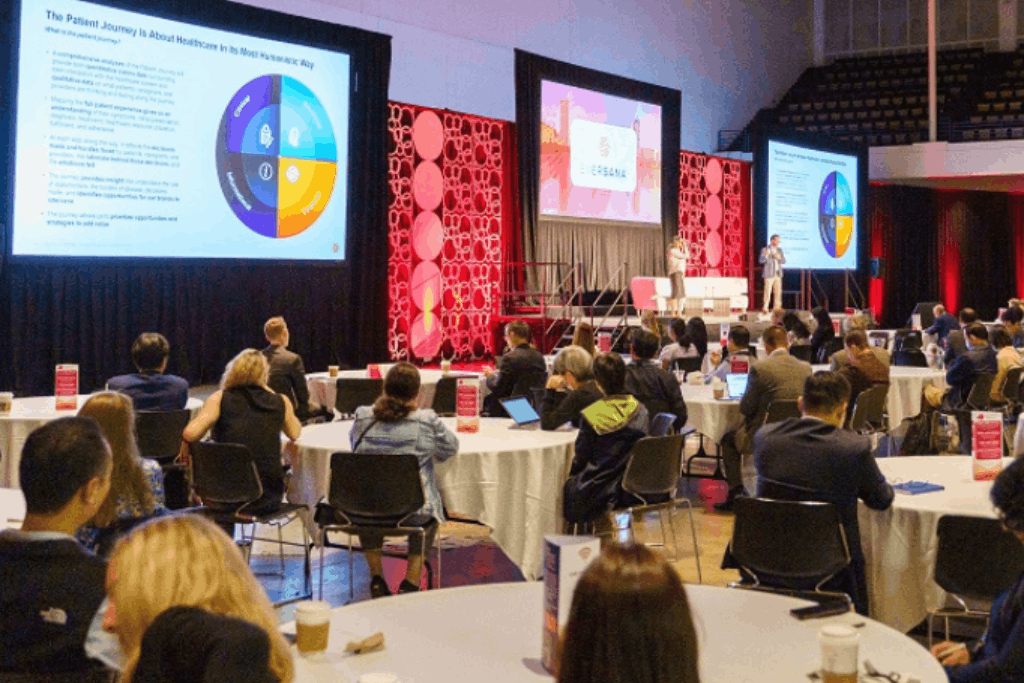
Explore the 2026 Agenda
Attendees gained actionable insights from expert-led sessions on advanced linker design, next-generation bioconjugation chemistries, and strategies to minimize off-target toxicity.
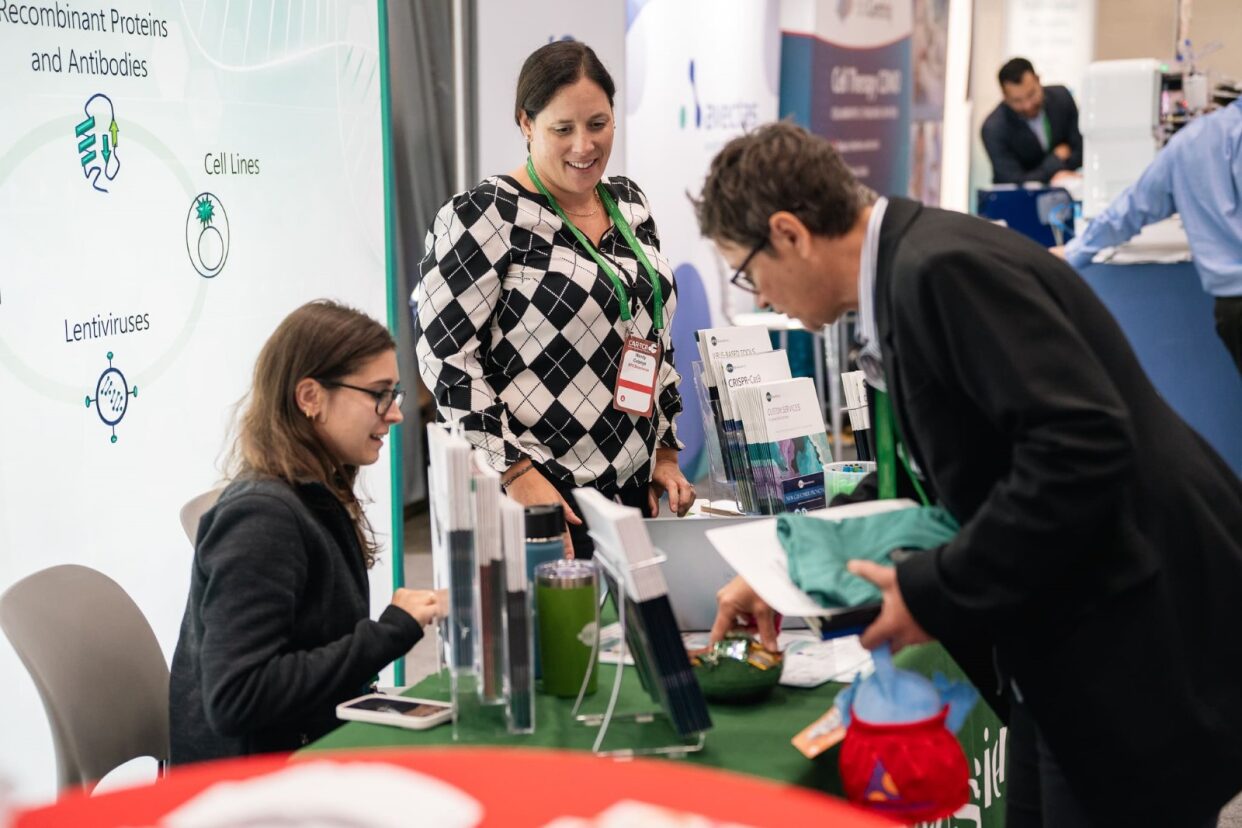
Partner With Us
Connect with 80+ ADC linker and conjugation leaders actively seeking solutions to advance the design, production and testing their of next-generation ADC technologies.
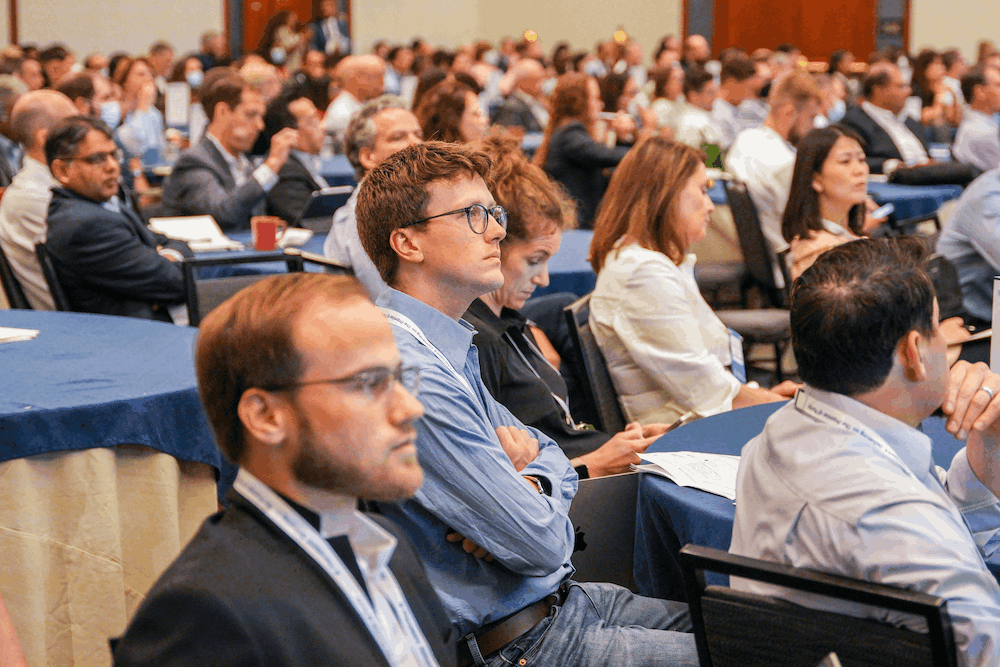
Join ADC Linker & Conjugation Experts
Network with senior scientists and highly technical experts working at the cutting edge of ADC chemistry, alongside key decision makers from leading biopharma organizations, in dedicated sessions designed to build meaningful collaborations.